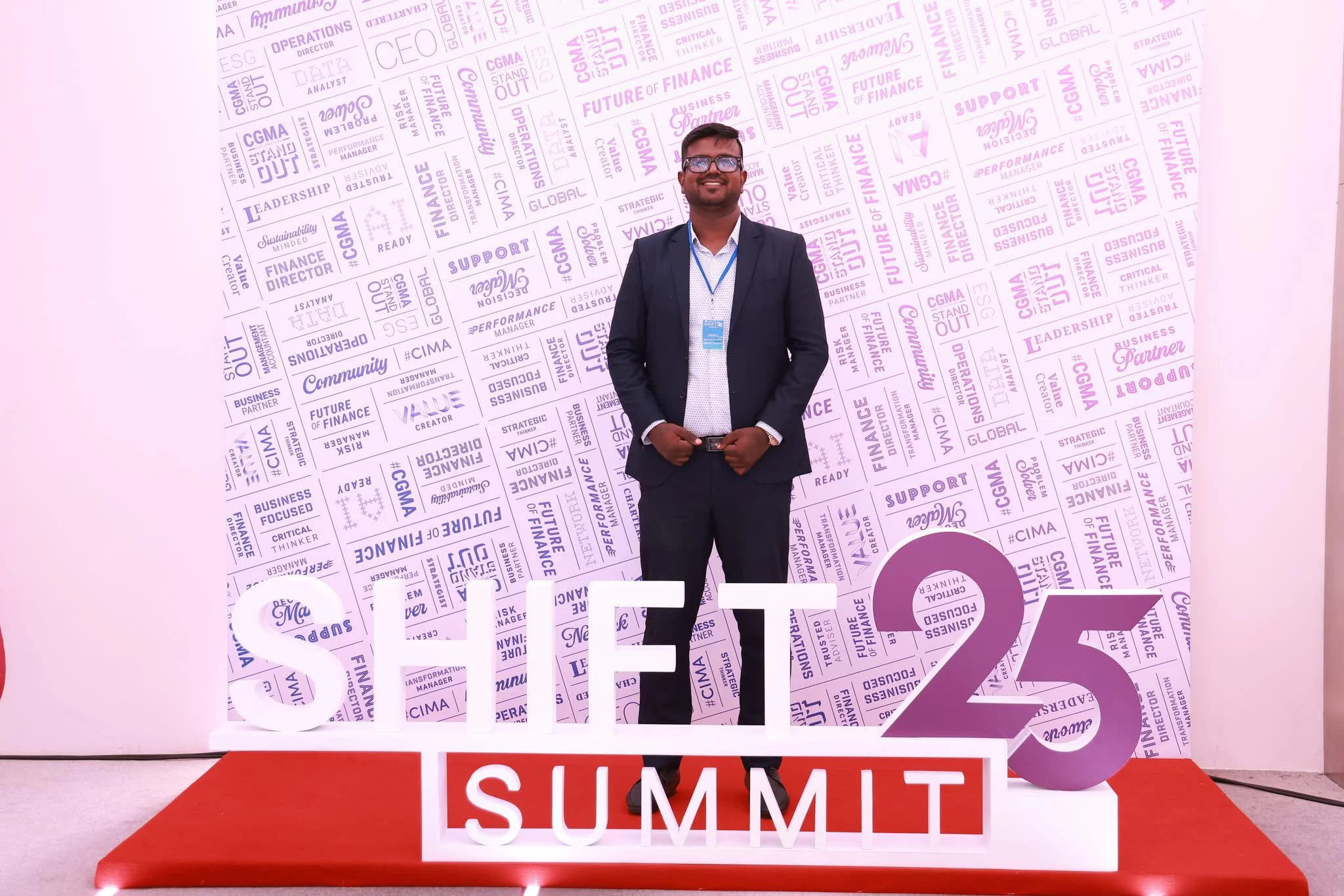
With the rapid rise of AI, there has been a recurring narrative suggesting that finance professionals, and perhaps the entire profession, may become obsolete. This fear is not new. When cloud-based accounting platforms like Xero first emerged, similar predictions were made.
Yet, those technologies did not replace finance teams; instead, they transformed how they work.
1. Finance Will Continue to Lead Innovation and Strategy
The pace of change in finance is undoubtedly exponential, and the pressure on finance leaders to evolve their roles, capabilities, and mindsets has never been greater. However, it’s the deep understanding of finance that can navigate this period and drive economies and businesses forward during this period of rapid systemic change.
Andrew Harding FCMA CGMA emphasised that finance professionals must adapt quickly and develop: people skills to influence and collaborate across teams, digital fluency to leverage data and automation, and leadership to drive the imminent cultural transformation.
Harding also emphasised a growing shortage of skilled staff as the biggest challenges CFOs face today.
The answer lies in a constant focus on upskilling and reskilling. Finance teams need to move through four stages of thinking: Starting from Strategic, then Systems, to Critical, and finally Expert. Each stage builds their capability to tackle the complex challenges of today and whatever’s coming next.
2. If You’re Not Digital First, You’re Already Behind
An insightful fireside chat moderated by Rukshani Malewana brought together leaders from Brandix, SLT, and AICPA & CIMA to discuss why digital transformation is no longer optional.
Our key takeaway was how early adopters will always outperform reactors. According to recent studies, companies that prioritise digital transformation are 1.5 times more likely to report double-digit revenue growth compared to their peers.
Digital-first organizations are also better equipped to adapt to market disruptions, leverage data-driven insights, and deliver superior customer experiences. While acknowledging that digital investment carries risks, panellists agreed that the greater risk lies in standing still, as businesses that fail to embrace digital transformation risk falling behind or becoming obsolete.
3. AI Adoption: Go Big or Play It Safe?
In an Oxford-style debate, experts from EngenuityAi, Nagarro, WSO2, and other tech powerhouses weighed in on the great AI dilemma, with interesting arguments were put forth from both sides.
The “Go Big” camp underscored that bold investment in AI is already delivering measurable returns. Companies adopting AI at scale are outperforming the broader market, seeing significant gains in productivity, cost reduction, and innovation.
AI is no longer a novelty; 41% of companies are actively researching AI and 15% are deploying it at enterprise scale, with the majority of IT decision-makers expecting AI budgets to rise or hold steady in the coming year.
The “Play Safe” side raised valid concerns about the risks of rapid, unchecked adoption. Immature regulation, high implementation costs, and unresolved issues around ethical governance and transparency could expose organizations to reputational, legal, and operational risks. Security, privacy, and bias remain top challenges, with 47% of businesses citing governance as a key barrier to further adoption. There is consensus that a “move fast and break things” mentality could amplify systemic risks and erode trust if not balanced with comprehensive oversight.
Ultimately, the debate made clear a central truth: while approaches to AI adoption may differ, the imperative to act is universal.
4. Talent Is the Billion-Dollar Investment
Harsha Randeny , Country Manager of Microsoft Sri Lanka and Maldives, framed talent as the ultimate IP: not based on salary, but the value individuals bring through agility and adaptability.
In the AI era, it’s no longer only prioritising the right skill set over the right credentials, but it’s also about hiring for a growth mindset. Employees who embrace continuous learning, stay open to change, and contribute beyond their roles will be the most valuable assets to organisations.
5. The Different Hats of a CFO
The Leadership Exchange panel revealed how CFOs are also stepping up in their roles amid disruption.
What sets today’s CFOs apart is their ability to connect metrics to business impact. No longer limited to cost control and compliance, modern finance leaders are using real-time data and advanced analytics to drive strategy, optimise resources, and unlock growth.
A Deloitte survey found that 79% of CFOs now play a leading role in digital transformation and business model innovation.
As trusted advisors to CEOs and boards, CFOs who take on a strategic role make their companies 1.4 times more likely to see above-average revenue growth. Their influence goes beyond numbers: they’re driving culture change, building agile, digitally skilled teams, and designing the collaboration across functions based on data.
The modern CFO is a key architect of business resilience and transformation in a rapidly evolving landscape.
6. Preparing for Regional Power Shifts
The regionally focused panel underscored Sri Lanka’s evolving economic positioning and trade outlook, highlighting the critical role of South-South partnerships, particularly between Sri Lanka and India, in stabilizing the economy during times of crisis.
These collaborations have been instrumental in driving the country’s remarkable 5% growth in 2024.
The discussion reinforced that the finance profession must adopt a future-oriented mindset, integrating macroeconomic trends, trade evolution, and fiscal reforms to sustain medium-term growth and inclusive recovery.
In a time of shifting global trade dynamics, geo-political tensions, and economic re-structuring, forward-thinking financial leadership is essential to ensure resilience and equitable progress for Sri Lanka’s economy.
7. Coopetition: The Future is Collaborative
Ramesh Shanmuganathan from John Keells Group introduced the compelling concept of, “coopetition”. The idea of collaborating with competitors to grow the market rather than fighting for a larger slice of the same pie.
He challenged businesses to move beyond building isolated empires and instead focus on creating ecosystems through shared investments, strategic partnerships, and co-creation.
This approach will drive true industry-wide progress.
It’s a bold mindset shift: from rivalry to collective growth. Where the focus is on creating win-win outcomes that benefit the broader business landscape.
As Dr. Shanmuganathan highlighted, this is what truly sets market leaders apart in today’s interconnected economy.
8. Culture Is the Real Catalyst for Transformation
Closing out the summit, Malar Villi Suppramaniam‘s session emphasised that tools and technology alone cannot drive transformation, but people do.
Culture is the invisible force determining an organisation’s capacity for real change. Leaders must recognise that emotional intelligence, creating spaces for trust and vulnerability, and inspiring teams to commit to incremental daily actions are essential.
These small, consistent steps compound over time, unlocking sustainable, meaningful transformation that technology alone cannot achieve.
Final Thoughts
The conversations at SHIFT 25 weren’t about surviving disruption or speculating about a distant future. They were grounded in the now, focused on what the finance profession must act on today.
The future is already here, and it demands an immediate response.
For CFOs, this means stepping fully into their roles as strategic advisors and culture architects that guide transformation, and not just enable it.
For business leaders, it’s about embedding digital thinking and continuous talent development into the DNA of daily decision-making.
For emerging finance talent, it calls for a mindset rooted in agility, where mastering both technical expertise and human skills is non-negotiable.
SHIFT 25 served as a timely reflection on what we must all do, individually and collectively, to raise the bar. From driving coopetition across the industry to accelerating the shift toward a more adaptive, innovative future, the message was clear: the time to act, and the time to lead, is now.
Leave a Reply